Philanthropic.Art
Philanthropy: money and/or time given for the wellbeing and benefit of others.
Art: something created and crafted for the mind and body that carries special significance.
Philanthropic: an adjective that describes a noun (a word to supplement art).
DEFINING PHILANTHROPY
There are two kinds of philanthropic contribution for the long term well-being and benefit of others:
1. the giving of financial and practical support.
2. the giving of time and effort.
An individual may be a philanthropist in either, or both ways. There are many areas of philanthropy that include the fields of education, medicine, social welfare, science, the environment, and art. Philanthropy is not associated with a particular culture, political stance, or religious belief.
A Content Philanthropist originates work that is given freely to others.
Philanthropic Art is the creation, production, distribution, and presentation of art that requires no payment to experience.
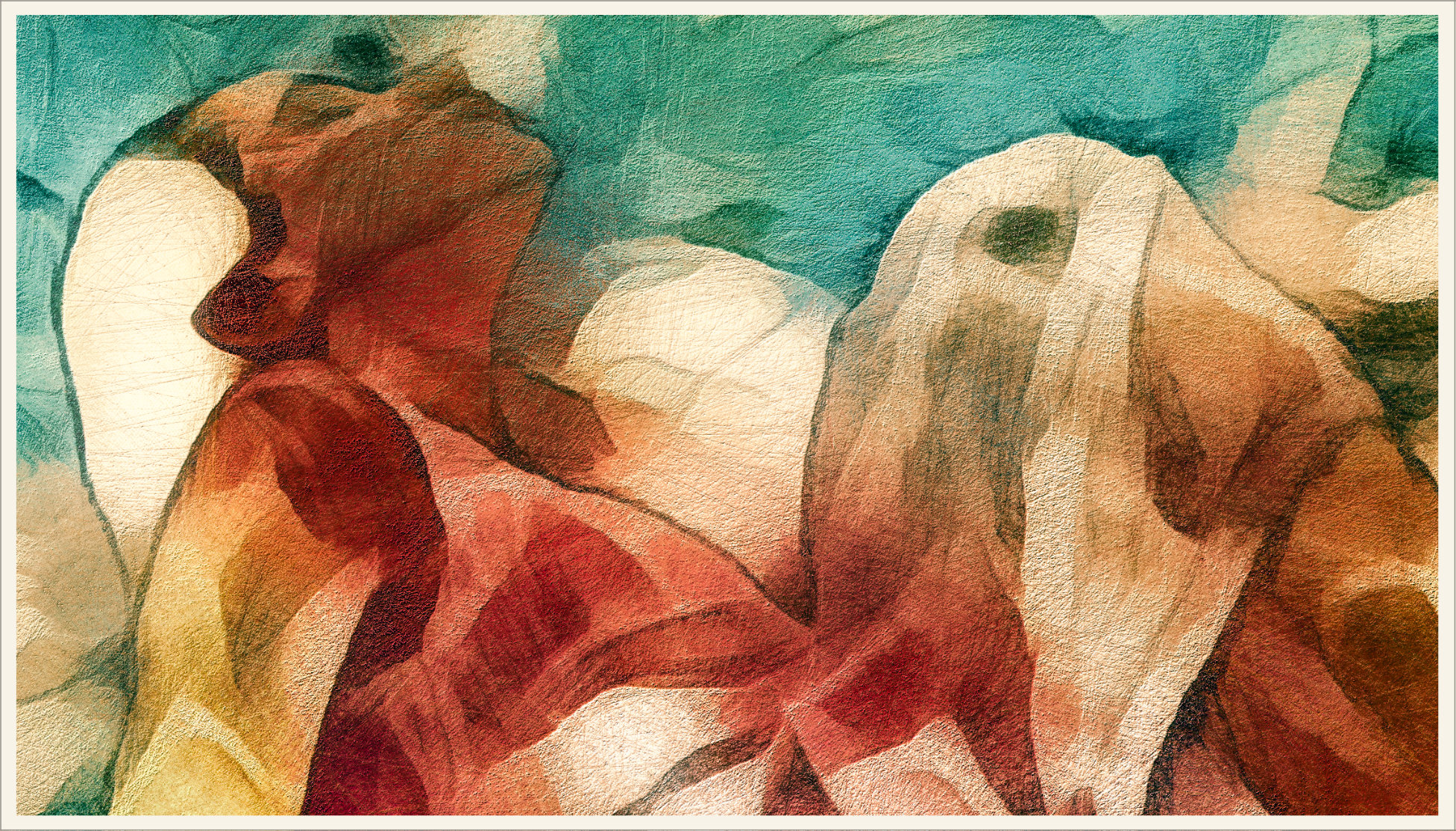
Artwork and Publication: With And Alone
POLITICS AND ART
Politics: the use of power by one person or group to affect the behaviour of another.
The power of art is in its emotional and intellectual impact across time and place. Art, like nothing else, connects with us no matter our age, gender, economic circumstance, and cultural setting.
The act of making and giving art freely speaks of a political conviction that views the world not in transactional terms (I give this to get that), but rather as a place of community where we have the opportunity to share and grow together.
Music: The Gentle Shore
Art and the Good Life
The Good Life: a life of well-being, meaning, and moral integrity.
Anyone who has gazed at a painting they feel as beautiful, or listened to music that moves them, experiences a sense of value that points toward a deeper understanding of what art can be when it is not treated primarily as a commodity.
The experience of art produces physical, spiritual, and social benefits. When access to art requires the use of disposable income we restrict its benefits to those who can afford it, creating a culture deficit among the less privileged. By removing financial barriers, Philanthropic Art maximises the distribution of art, and treats aesthetic experience as a utility: a necessity for humans to thrive.
When artists create from a place of the spirit rather than from practical need, they feel more compelled to bear witness to the living world in ways that commercial imperatives might suppress or over simplify. Art fosters what the philosopher Arne Naess called 'ecological selfhood', that is the expansion of our identity to include the other-than-human world. When art is offered freely, it reminds us that we are trustees of a world and a sense that we belong to a community that includes the broad reach of personal and shared experience, ecology, and living things.
Communitarianism is an idea that the good life is inherently social: that we become persons through our relationships and shared commitments, not despite them. With this in mind we are made whole by our connections.
Philanthropic Art strengthens social fabric because it operates as a gift rather than a contract. In giving freely, artists create social capital: the ties of recognition, thanks, and shared meaning that bind communities together. The free concert in the park, the mural on a public wall, the poem left anonymously on a bench are acts that create aesthetic solidarity. They remind us that we are not merely consumers in a marketplace, but citizens sharing a world.
Existentialism is the view that each person is a free, responsible individual who shapes their own growth and identity through conscious choices and acts of will. Authenticity, an existentialist virtue, is particularly relevant to the tension between vocation and income that every working artist must navigate. Artists need to eat, house themselves, and care for their loved ones. Patrons have supported artists, markets have discovered and rewarded them, and the democratisation of creative tools has allowed many to earn sustainable livelihoods from their work. The difference between earning a living through art and treating art as primarily a wealth-generation mechanism is however important. When financial return becomes the principal motivation to make art, the work changes as its focus is to exploit algorithms, satisfy trends, and to deliver returns on investment. Commercial Art closes in on itself, becoming primarily a product to be paid for.
Philanthropic Art is an act of resistance against the reduction of human life to productivity and profit. It declares that art is not the privilege of the few, but a fundamental expression of human dignity.
When artists are supported through patronage, public funding, alternative economies, or hybrid models that allow for both commercial and philanthropic approaches, they gain the freedom to give. Philanthropic Art ensures that the transformative power of art reaches those who otherwise least afford it: the young, the marginalised, and the economically precarious.
Gift economies create bonds between people in ways that market exchanges do not. When we receive something freely, we are subtly transformed. We recognise our connections, and some may be inspired to give more. Philanthropic Art operates in this gift economy. The audience that encounters free art are not consumers completing a transaction but recipients entering a relationship. They become, in that moment, responsible for noticing, for feeling, for carrying whatever insight the work offers into their own relationships with the world.
Art as vocation offers an example that we are responsible for one another, for the living world, and for the future that unfolds. It does this not through instructional and informative qualities, but through the indirect, subtle work of aesthetic experience. When we stand before a work that has been freely given, we understand that someone cared enough to make it and to share it without return. This models a form of human relationship based on abundance rather than scarcity, on trust rather than calculation. It suggests that the world is not merely a competition for resources, but a place where meaning and beauty can be generated and circulated generously.
The good life is not a life of ease or endless consumption. It is a life of engagement and response towards the communities and ecosystems that sustain us.
The transformation of art is in the recognition that it is not only entertainment or decoration, but a fundamental human practice through which we learn to see one another, to feel with one another, and to care for the world we share. Art in this way is offered openly, like a public garden, or a shared story around a fire.
The patron of Philanthropic Art safeguards beauty in public life, fosters connections through shared aesthetic experience, and keeps the rich landscape of the arts accessible to all.
My Journey As A Content Philanthropist
My name is Mike de Sousa. I have created public art for over forty years, and have made art that has been freely accessible online since 2000. The first artwork above, I Want To See, is one of several you will find here.
I devote all my working time and effort towards creating music, art, and words that I publish and make available without payment or commercial advertising of any kind. Those experiencing content in this way do so without the demands and distraction of money and ownership. Philanthropic Art allows the focus to be wholly on how it is felt and thought of...
I dream two love.
A one line four word poem: I Dream
My conviction is that art in all its forms has transformative qualities that not only inspire, but also holds the potential of bringing us closer together through its journeys of the heart, mind, and body. Art can help us act well. You may also be interested in reading Interwoven: Art and Public Good at Art Lover Reviews that also presents my approach to making.
In my twenties and thirties I worked as a composer, pianist, and percussionist with dancers and choreographers from New York Ballet, Ballet Rambert, Paris Ballet, and London Contemporary Dance Theatre. I continued to compose and make art as I enjoyed economic success as a co-founder of a software company in my forties, but decided to dedicate myself wholly to making public art in 2015. To those who value economic security, my walking away from a very well paid directorship may seem baffling. My view that art and ideas should be made available to everyone, freely, had however hardened over time.
I view art in all its forms as important as the air we breathe and the water we drink. Art is the way we share, individually and collectively, most profoundly through its connections with the human spirit. The arts can also be invaluable as a means to encourage peace and understanding, often between those with opposing views and beliefs. Making art for others is of far more consequence than making money for myself.
Although I am not rich, I count myself as fortunate and have the means to make a contribution when others who have less do not. I feel a responsibility to do so.
My decision to devote myself to creating art and ideas for all results in my having less income than I would otherwise enjoy.
In addition to the economic consequence of content philanthropy, there are personal and cultural sacrifices too. The value of art is often and mistakenly thought of in economic terms. I write about this in my publication The Profit of Art. A great deal of art is sold, often as an exclusive entity that only a few, or even only one will experience. The economic price paid for a work of art is widely celebrated and envied. As someone who offers my work freely, some will judge it therefore has less value. There are however numerous examples of those who have made art that was not created for the marketplace, but rather for its strength to enrich and inspire. Some, like William Blake, become well known after their time. Others like Banksy, have their work economically exploited during their time.
Cultural critics and the arts establishment often assess art's status on the bases of its perceived public acclaim, critical notoriety, and the ability to generate revenue. Where capitalism thrives, all three feed on one another, and it becomes difficult for many to cleave themselves away from the notion that good art is that which is well known, recognized by the cultural elite, and demands a high price.
Despite the challenges of my philanthropic work, I continue to believe in the importance of making art and ideas that are accessible without the barrier of having to pay for it. I consider those things of most importance have nothing whatsoever to do with money, and I want those with least to have the same opportunities of being enriched by music, paintings, poetry and more, as those who are economically wealthy. Hope, compassion, kindness, and love are of greatest value. These cost nothing to give but our effort to act well, and I view making art in this same way.
